Science is all around us! From the air we breathe to the stars in the sky, science helps us understand how the world works. The best part is that learning science doesn’t have to be difficult—it can be exciting, surprising, and full of fun facts that inspire curiosity.
At The Bharat School, we believe that children learn best when they are encouraged to ask questions, explore new ideas, and discover answers through observation and hands-on activities. Here are ten amazing science facts that every child should know.
1. Bananas Are Slightly Radioactive
It may sound surprising, but bananas contain a small amount of potassium, including a naturally occurring radioactive form called potassium-40. Don’t worry—it’s completely safe to eat bananas every day because the amount is extremely small.
Fun Fact: Bananas are also packed with nutrients that help children stay healthy and energetic.
2. The Human Brain Never Stops Working
Even when you’re asleep, your brain is busy. It controls your breathing, heartbeat, dreams, and stores memories. That’s why getting enough sleep is important for growing children.
3. Water Can Exist in Three Different Forms
Water is one of the few substances that naturally exists as:
- Solid (Ice)
- Liquid (Water)
- Gas (Water Vapour)
Children can observe all three forms through simple activities at home or in school.
4. Plants Make Their Own Food
Unlike humans and animals, plants don’t need to find food. They prepare it themselves through a process called photosynthesis using sunlight, water, and carbon dioxide.
This is one reason why plants are essential for life on Earth.
5. Your Heart Works Every Second
The human heart beats around 100,000 times every day, pumping blood throughout the body. It supplies oxygen and nutrients that help every organ function properly.
Keeping your heart healthy through exercise and nutritious food is very important.
6. Sound Travels Faster in Water Than in Air
Many sea animals, such as whales and dolphins, communicate over long distances because sound travels much faster underwater than through the air.
This fascinating fact shows how animals adapt to their environment.
7. Honey Never Spoils
Honey is one of the few natural foods that can last for years without going bad when stored properly. Its natural composition prevents bacteria from growing.
That’s why honey has been valued by people for thousands of years.
8. The Earth Is Always Moving
Although we don’t feel it, the Earth is constantly:
- Rotating on its axis, causing day and night.
- Revolving around the Sun, creating the seasons.
Every day, we travel thousands of kilometres through space without even noticing!
9. Lightning Is Hotter Than the Sun’s Surface
A lightning bolt can reach temperatures of around 30,000°C, making it much hotter than the surface of the Sun.
This incredible amount of energy is why thunderstorms should always be treated with caution.
10. Every Fingerprint Is Unique
No two people in the world have exactly the same fingerprints—not even identical twins. That’s why fingerprints are often used for identification.
Take a close look at your fingers, and you’ll notice beautiful patterns made by nature.
Why Learning Science Is Important
Science teaches children more than just facts. It helps them:
- Ask meaningful questions.
- Think logically.
- Solve problems creatively.
- Observe the world carefully.
- Develop curiosity and confidence.
When children enjoy science from an early age, they become lifelong learners who are eager to explore new ideas.
How Parents Can Encourage Scientific Thinking
Parents can make science enjoyable by:
- Performing simple experiments at home.
- Visiting science museums and nature parks.
- Encouraging children to ask “why” and “how” questions.
- Watching educational science videos together.
- Reading books filled with science activities and discoveries.
Learning science doesn’t always require a laboratory—everyday life is full of opportunities to explore and discover.
Learn Science Through Exploration at The Bharat School
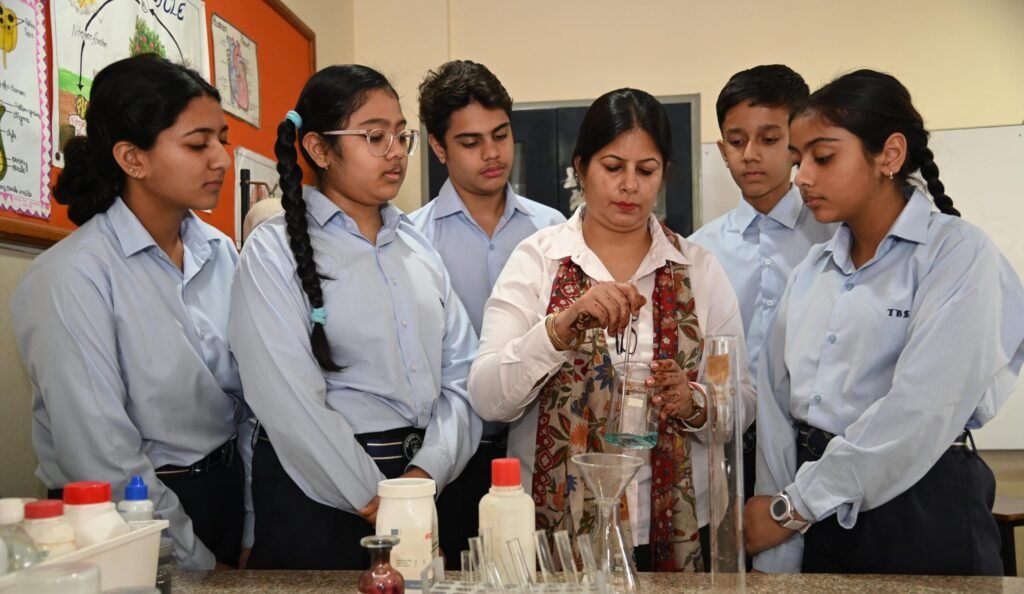
At The Bharat School, science is taught through activity-based learning, practical demonstrations, interactive classroom discussions, and real-life examples. Our teachers encourage students to observe, experiment, and think independently, making every lesson engaging and memorable.
By creating a fun and supportive learning environment, we help children develop curiosity, creativity, and a lifelong love for science.
Conclusion
Science is full of amazing discoveries that make learning exciting for children. From understanding how plants make food to discovering why lightning is so hot, every scientific fact opens the door to new questions and greater curiosity.
When children are encouraged to explore the world around them, they build knowledge, confidence, and problem-solving skills that will benefit them throughout life. Inspiring curiosity today helps create the innovators, thinkers, and leaders of tomorrow.